Equal Voices
Goals
A project
Supported by
In partnership with

Presentation
In late 2022, CFI published a study on gender equality in the media and media content in sub-Saharan Africa. It reveals that many women working in the media industry experience discrimination and violence. Often under-represented in positions of responsibility, they must fight to assert themselves.
In light of these findings, the Equal Voices project aims to combat gender inequalities and stereotypes in the media of Côte d’Ivoire and Ghana. It encourages managers of media outlets to promote better representation of women, in both their managerial practices and their editorial policies.
It is jointly implemented by CFI and the Media Foundation for West Africa (MFWA).
Project beneficiaries
- 8 directors and 32 journalists from 8 media outlets (4 from Ghana and 4 from Côte d’Ivoire)
- 16 female journalists from other media outlets or independent media outlets
- Representatives of self-regulatory bodies, professional organisations and training bodies from these countries.
Files to download
Actions
Improved gender mainstreaming within media outlets
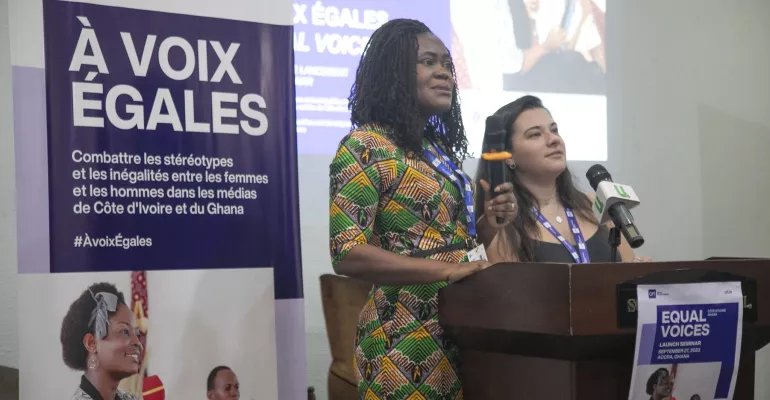
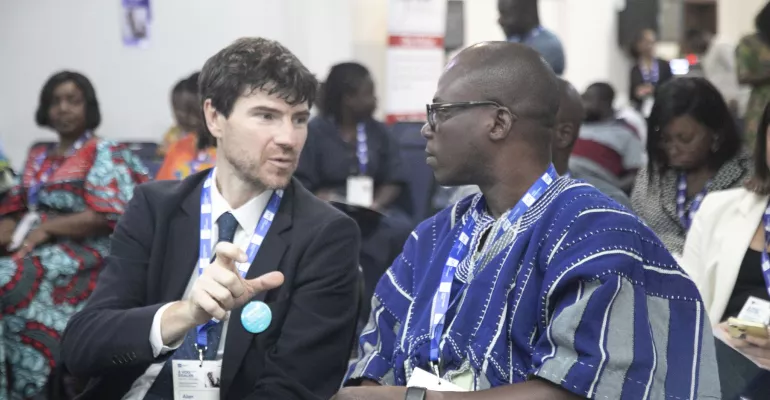
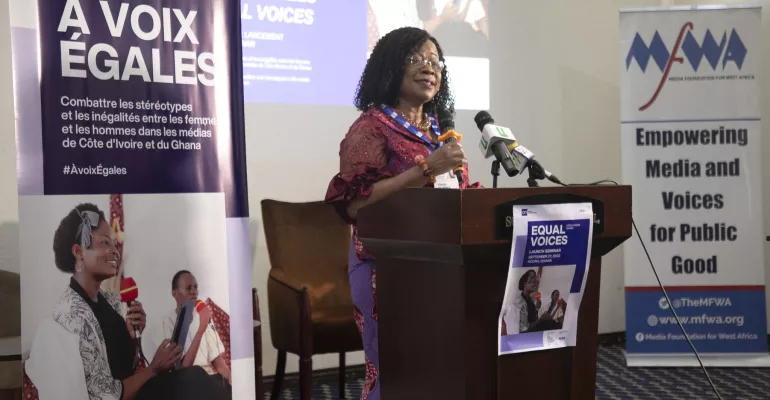
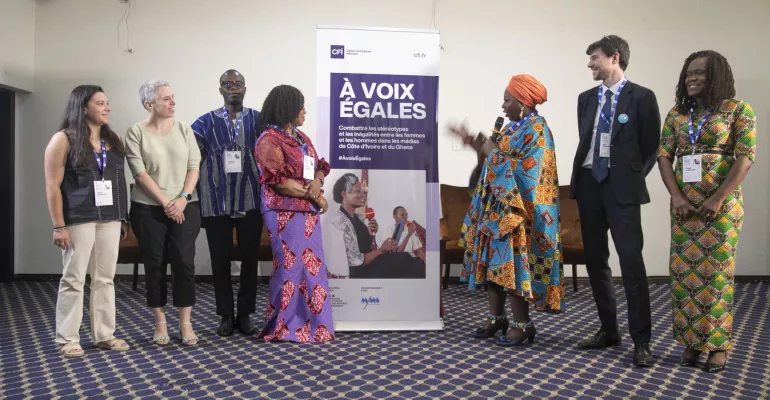
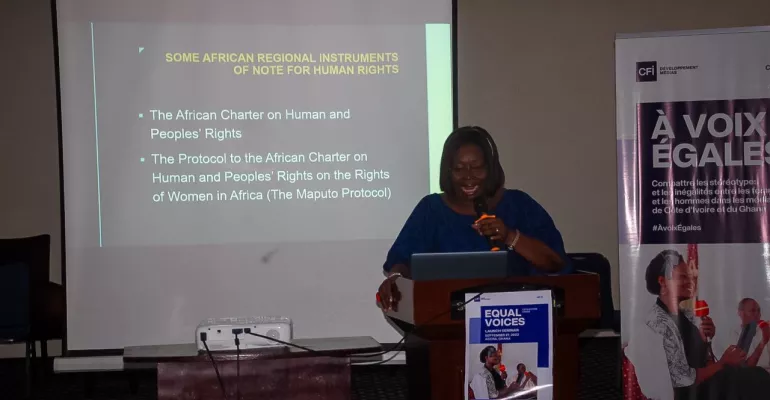
- Regional project launch event in Accra;
- Peer-to-peer workshops for 8 media outlet managers (4 from Ghana and 4 from Côte d’Ivoire) and personalised support through mentoring;
- Consultation workshops strengthening the dialogue between media organisations and other stakeholders in the empowerment of women in Côte d’Ivoire;
- Regional closing conference in Abidjan.
This component is implemented by CFI.
Capacity-building for journalists, empowerment of women and strategic dialogue
- Training of 16 journalists in gender-sensitive journalism in Ghana and Côte d’Ivoire;
- Supporting the 16 journalists in the production of gender-sensitive content;
- Personal development training for media professionals in Ghana (Accra) and Côte d’Ivoire (Abidjan);
- Conference on the empowerment of female media professionals and the empowerment of women through the media in Ghana and Côte d’Ivoire;
- Consultation workshops to strengthen the dialogue between media organisations and other stakeholders in the empowerment of women in Ghana.
This component is implemented by MFWA.
The evaluation sought to measure the project’s relevance, coherence, effectiveness, efficiency, impact and sustainability, while also identifying lessons learned and recommendations for future interventions.
In terms of relevance, the evaluation found that the project responded closely to the needs identified in the 2021 GRET study, which showed the under-representation of women in media content, the persistence of gender stereotypes and the lack of leadership opportunities for women journalists.
Regarding coherence, the project aligned with CFI’s 2019 gender strategy and complied with OECD Gender Marker 2 requirements in its design and objectives.
In terms of effectiveness, the evaluation found that CFI established clear governance with MFWA and other partners, allowing structured coordination, regular follow-up and synergies between Ivory Coast and Ghana. This arrangement facilitated exchanges of good practice but also created occasional confusion and delays due to subcontracting chains and dual roles.
On efficiency, the evaluation found tangible changes in awareness and practices among participating journalists and media managers in both Ivory Coast and Ghana.
Turning to impact and sustainability, the evaluation observed encouraging but still fragile changes in managerial practices within media houses. Managers in both countries reported greater sensitivity to gender biases and a willingness to revise recruitment and promotion practices.
Looking ahead, the evaluation highlights the importance of developing a robust monitoring framework to capture project and audience data, organisational change and content diversity systematically from the outset.
Final evaluation
Project gallery