Pilot Hackathon Unites Journalists and Civil Society to Bridge Central Asia’s Digital Divide with AI
Related project
AGILEPart of the EU-funded AGILE project implemented by CFI, the event in Astana brought together diverse disciplines to create innovative solutions for millions disconnected from verified information.
Astana, Kazakhstan — For Dilnoza Karimova*, a 43-year-old journalist living on the jagged frontier where Kazakhstan, Tajikistan, and Uzbekistan meet, the borders are not just lines on a map, they are daily barriers to understanding.
Communication across languages is vital here, says Karimova, who entered the media field five years ago to honor the legacy of her late sister. We want to strengthen cooperation with neighboring countries, but it is essential for our audience to actually understand our content.
Karimova’s struggle is a symptom of a much wider crisis. Across Central Asia, millions remain disconnected from verified information due to systemic poverty, language barriers, and persistent digital gaps. As a result, vast segments of the population are forced to rely on unmoderated social media channels, where misinformation and propaganda often spread unchecked, filling the void left by a lack of accessible, independent journalism.
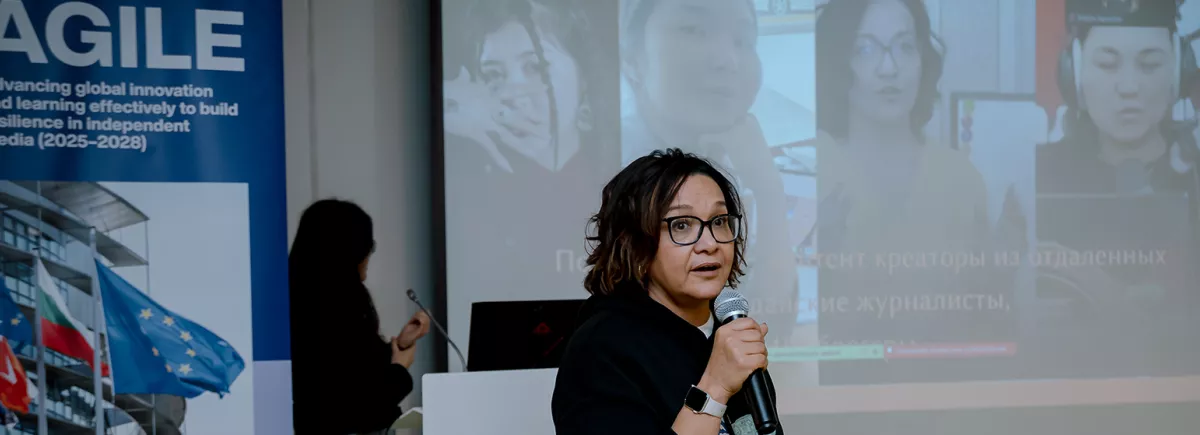
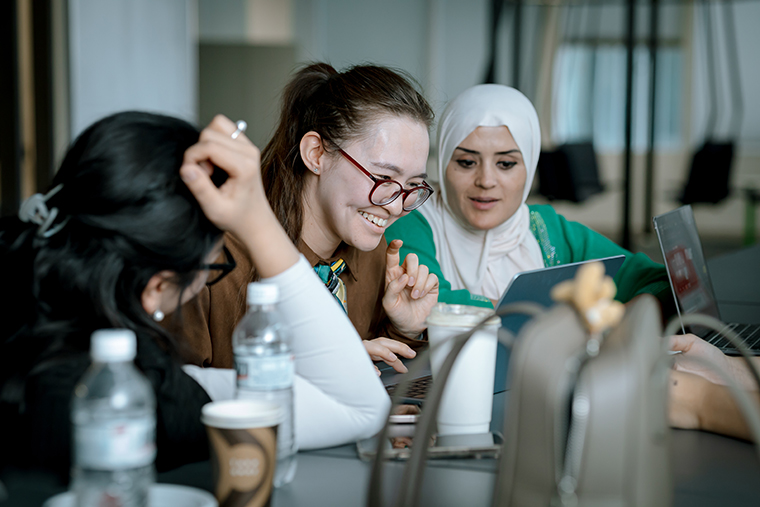
To address this systemic disconnect, Karimova joined a unique convergence of professionals gathered in Astana from 26 to 28 November 2025 for a pilot AI/Tech4Good Hackathon.
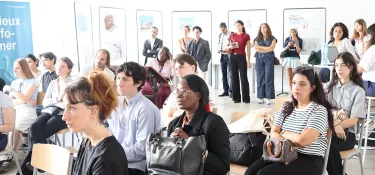
Organised by CFI (the French Media Development Agency), the event aimed to promote innovations from the field. Breaking down the barriers between technical and social fields, the hackathon brought together journalists and civil society leaders with university students and tech specialists from Kazakhstan, Kyrgyzstan, Tajikistan and Uzbekistan. Together, they represented a cross-section of the region's evolving society, with over 95% of whom were women, working together to co-create digital solutions for inclusion.
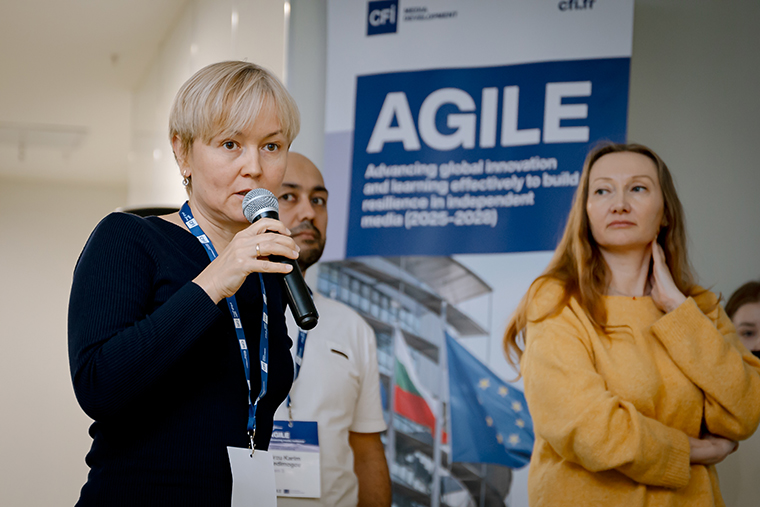
This initiative is a cornerstone of AGILE (Advancing Global Innovation and Learning Effectively), a project funded by the European Union (EU) that operates on a global scale. CFI led the activity, which was supported by Istorias Media and the North Kazakhstan Legal Media Center.
The urgency of this mission is underscored by the region's reality. Reporters Without Borders (RSF) has highlighted the increasingly precarious state of press freedom in Central Asia.
In the 2024 World Press Freedom Index, the majority of the region's nations are classified as having a "difficult" or "very serious" situation. In a landscape where CFI identifies a critical need to strengthen resilience against shrinking civic space, the ability to bypass traditional barriers — whether linguistic, economic, or political — is not just a technical convenience, but a democratic necessity.
"Hands-on" solutions
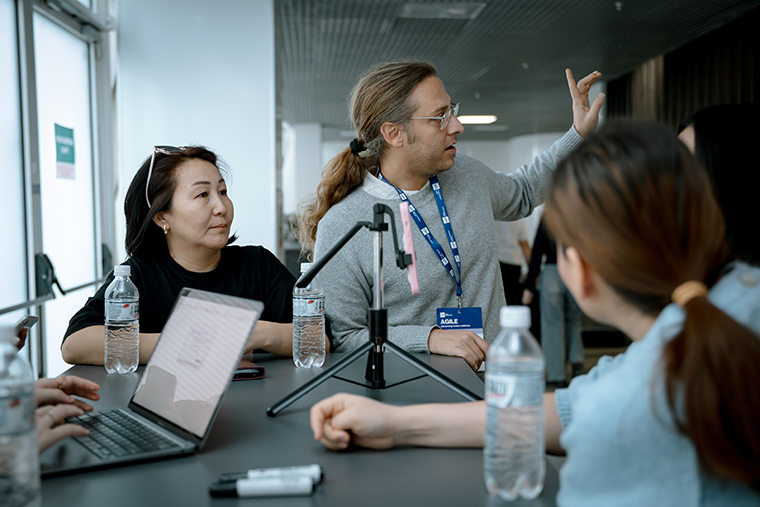
For three days, these multidisciplinary teams engaged in a rigorous "Hack and Train" format designed to move beyond the passive listening of traditional conferences. The four teams developed prototypes addressing visceral regional issues: linguistic inclusion, disability access, and news verification.
In a conference, you have passive participation, explains Stefano Marchesi of Istorias Media, who served as the event's Artificial Intelligence (AI) mentor. This context gives people the chance to get hands-on and actually work toward a solution.
Marchesi highlighted that the success of the teams relied heavily on the fresh perspectives brought by the younger participants. I was surprised by the students, he noted. They revealed themselves to be a remarkable force for every project.
While AI is a global buzzword, the mentors found that practical application often remains elusive in the region. In general, everyone had used something to generate an image or get a quick answer, but no one knew how to truly unlock the instrument’s potential, Marchesi observed. I think for the majority, that door has now been unlocked.
For the organizers, the hackathon was also a study in cultural technological distinctiveness. While Western tech circles often revolve around web apps, the digital heartbeat of Central Asia is Telegram.
This local preference shaped the solutions. The winning project, led by Karimova, capitalised on this platform to create AI-driven translation tools. The tool aims to bridge the linguistic divide between neighboring nations.
For Dilnoza Karimova, the victory is personal as well as professional. I expected to gain new skills... but I was able to refine my idea, meet new people, and learn a lot about artificial intelligence, she said. She has already submitted a proposal to continue developing the tool.
As Central Asia continues to navigate its digital transformation, the AGILE project demonstrates that the future of the region’s technology won't just be defined by imported software, but by local coalitions of students, activists, and journalists building the bridges they need to reach one another. Finding innovative, locally tailored solutions is at the heart of CFI’s philosophy.
*The name has been changed to protect the individual’s privacy.
NB - AGILE Year One: Lessons from the Front Lines of Media Resilience
Independent media is under pressure worldwide. In its first year, the AGILE project worked to strengthen media resilience, from AI inclusion tools in Central Asia to supporting women media leaders in Africa and Asia. Here's what we learned.