Afri'Kibaaru 2: journalists on the ground to better understand the consequences of climate change
Related project
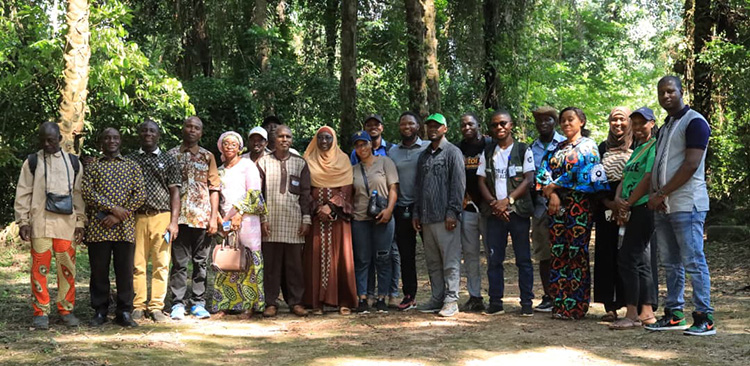
Afri’Kibaaru 2Twenty journalists were able to learn more about the effects of climate change through field visits as part of four press trips to Guinea, Cameroon, Senegal, and Côte d’Ivoire.
Climate change-related phenomena continue to receive little coverage in the national and local media in West and Central Africa, despite the devastating direct effects and impacts on biodiversity and human activities, depriving the population of key information about how climate disruptions impact their daily lives.
CFI, with funding from the French Development Agency (AFD) and in partnership with France Médias Monde (FMM), is implementing the second phase of the Afri’Kibaaru project, the aim of which is get the people of West and Central Africa more actively involved in the public debate on the Sustainable Development Goals.
The activities implemented by CFI are aimed specifically at building the capacity of the media and journalists in Senegal, Guinea, Côte d'Ivoire and Cameroon to produce reliable, accessible and high-quality content on the effects of climate change, highlighting adaptation and mitigation solutions put forward by the authorities, communities or eco-innovative businesses.
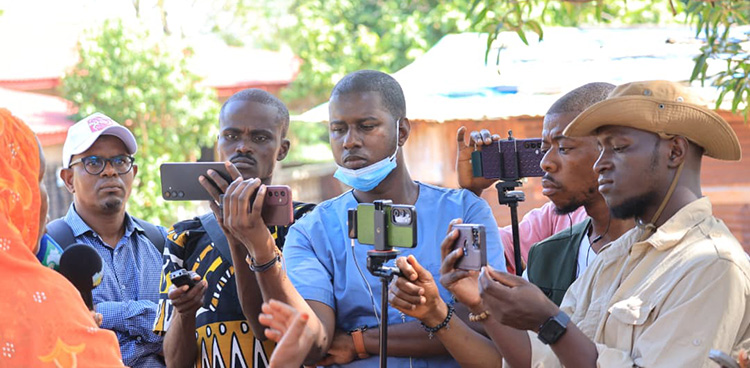
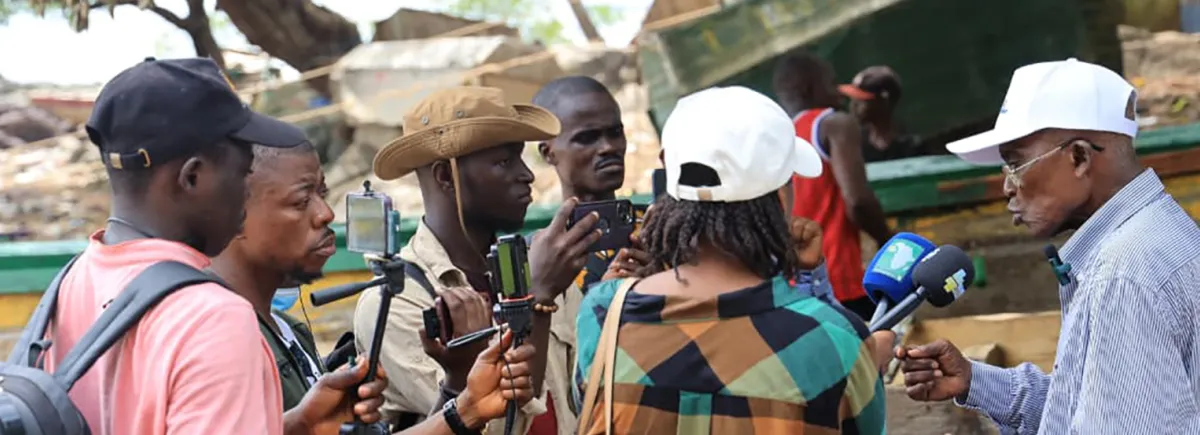
Press trips under the Afri’Kibaaru 2 project enable journalists to travel to places where the effects of climate change are visible, in order to produce reports on issues such as coastal erosion, deforestation, marine submersion, among others.
During these trips, journalists have the opportunity to talk to experts and civil society players, to better understand these phenomena and to convey them in their productions in a way that is clear and intelligible to their audiences.
This content should enable journalists to inform populations in West and Central Africa about the consequences that the effects of climate change have on their daily lives and the realities they must address, as well as to highlight existing adaptation and mitigation solutions.
In Guinea, for example, journalists had the opportunity to visit the Ourky Plus company, which transforms waste into paving stones. In Senegal, the visit by the IRD brought journalists and scientists together to gain a better understanding of the research being carried out on the ground. In Côte d'Ivoire, this second press trip enabled them to discover a Voluntary Nature Reserve. Finally, in Cameroon, the journalists spoke with residents of Londji in order to understand what the consequences of coastal erosion are for people.