Pop-up newsroom led by MédiAOS
Related project
MediAOSStrengthening the media means helping journalists to build their skills and to embrace the innovative tools that are radically transforming the profession.
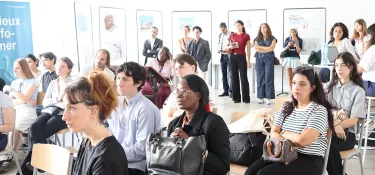
In Cotonou, CFI demonstrated this by bringing together 25 journalists from Benin, Togo and Chad at a pop-up newsroom organised to mark Digital Week last November.
Organised around three themed desks - Gender and Digital, Young People and Digital, and a Direct Desk - this newsroom operated like a truly collaborative press agency, overseen by an editor-in-chief and two editorial coaches. With 54 posts recorded (with a target of 25), 16 features in partner media outlets, and a participation rate of 100%, the initiative far exceeded expectations.
AI at the heart of training
A course on artificial intelligence applied to journalism was provided by Denis Ngarndiguina, a digital and AI expert. Participants discovered and tried out practical tools: ChatGPT and its Deep Research feature for in-depth research, VERA for fact-checking, and Transkriptor for automatic interview transcription. Beyond its technical aspects, the course also focused on ethical issues such as algorithmic bias, deepfakes and editorial responsibility regarding AI-generated content.
There was so much interest in this areathat the trainer had to spend more time on it than planned.
New formats to reach young people
Journalists were trained in four innovative formats: the smart brevity (a writing technique adapted to mobile devices), the listicle, real-time written coverage, and the vertical video face cam. At the same time, hands-on workshops on Canva (graphic design) and CapCut (mobile video editing) enabled participants to immediately produce content tailored for social media.
TEditor-in-chief Eric Le Braz made his position clear: “No reports. We're targeting young people, so we write and film in a modern way”.
Gender as a common thread
A gender-focused approach ran through all the posts: 95% of the content includes female voices, with a remarkable diversity of profiles - from Minister of Digital Affairs Aurélie Adam Soulé Zoumarou to female tech entrepreneurs and students. The topics covered reflect this commitment: women's access to AI in Benin, connected health with the Wallab app, a profile of Marlise Montcho, a leading figure in inclusive tech, and a focus on the “Digital Amazons”.
Results that exceed expectations
In five days, the 25 journalists produced 54 pieces of content (articles, videos, visuals), more than double the initial target. All the participating media outlets shared at least two posts. The Minister of Digital Affairs' visit to the pop-up newsroom underlined the institutional recognition of the initiative. Satisfaction surveys showed that 54% of participants said they were “very satisfied” and 46% “satisfied”, giving an overall satisfaction rate of 100%.
This first pop-up newsroom of this scale in Africa paves the way for lasting cross-border collaboration between media outlets in Benin, Togo and Chad, and demonstrates that innovative and inclusive journalism is possible, even with limited resources.