High Tension: Energy, Europe and Disinformation. Moldovan journalists on a study visit to France and Belgium
In the throes of the energy crisis, the climate emergency, geopolitical tensions and the enlargement of the European Union, the information circulating in the public sphere is sometimes exposed to false narratives. Distorted, and sometimes amplified by foreign influences, it can become a tool for manipulation. Amidst this blurring of reference points, journalists play a vital role as information mediators.
To support Moldovan media organisations fighting against this scourge of the democracies, CFI organised two study visits to France and Belgium in June 2026.
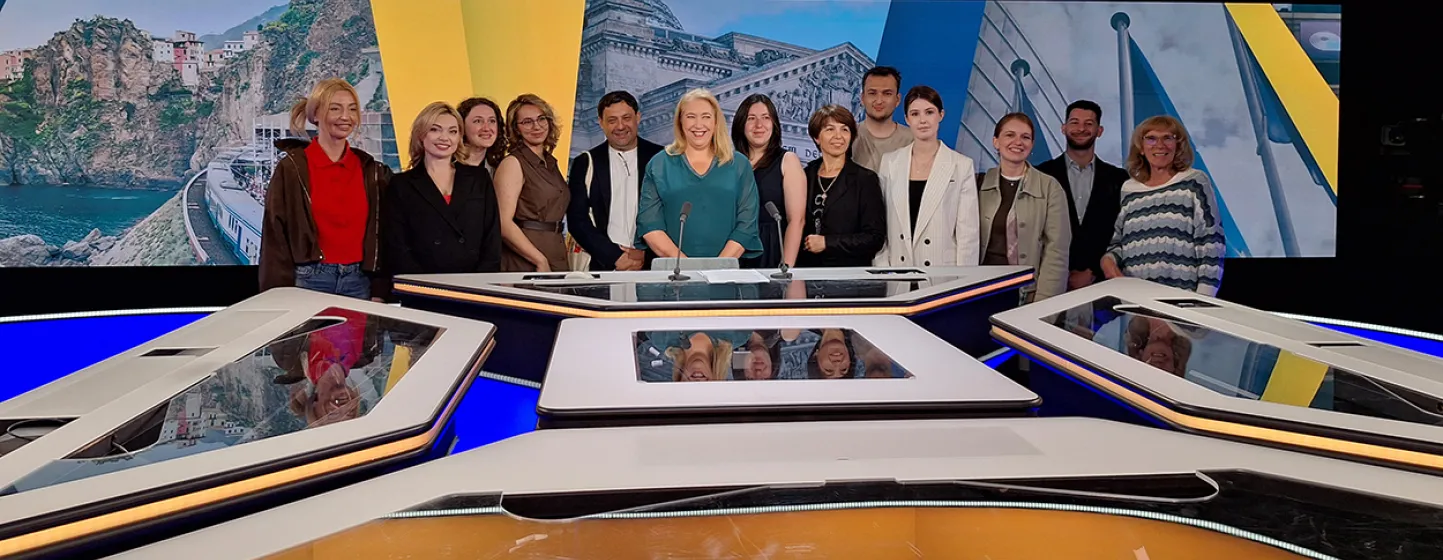
As part of the Democratic Strengthening of the Media in the Black Sea Region project, these visits benefited some thirty Moldovan journalists. Travelling from Brussels to Paris, via Reims and Metz, the group met with European officials, experts, regulatory authorities, stakeholders in the energy sector and media professionals.
The aim of this packed programme, which took the first group (10 journalists) to Paris and Metz from 1 to 5 June, and the second (18 journalists) to Paris and Brussels from 8 to 12 June, was to gain a better understanding, on the one hand, of the mechanisms that currently govern the electricity market and, on the other, of the institutional framework of the European Union (EU), with a view to promoting a more critical, instructive and better-informed discussion of these issues in the Moldovan public sphere.
How is electricity produced in France? How exactly does production here differ from that of Moldavia? How does the EU accession process work? And why are these issues prime targets for information manipulation?
We identified the key issues that structured the visits...
Who decides the price of our electricity?
Nuclear power represents about two thirds of electricity production in France, complemented by renewable energies, hydroelectricity and, to a lesser degree, biomass. Thanks to this largely decarbonised energy mix, the country enjoys a high degree of energy independence.
In their discussions with the teams from Enedis, the distribution network operator, the journalists learnt about the benefits of Linky smart meters in the adaptation of the system to the expansion of the renewable energies, the digitisation of the electricity system and the emergence of electricity producer-consumers. However, financing and developing solar projects is not just a matter for national authorities and businesses: local initiatives, such as the community-led solar projects run by Énergie Partagée in Étréchy, in partnership with the local authorities, have made it possible to assess all the benefits.
The group then travelled to Metz to meet with officials from the UEM (Metz Electricity Plant) and learn about its model, which combines local generation, biomass-fuelled district heating networks, hydroelectric power stations and collective self-consumption.
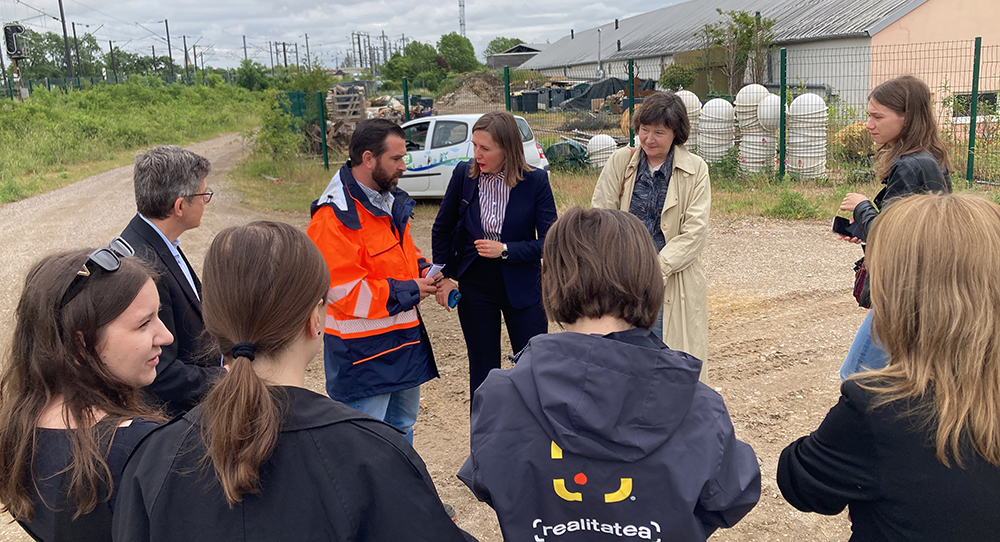
Combining public intervention, market competition and independent regulation, the French energy sector is based on a balance that is constantly changing. Discussions with Senator Vincent Delahaye, experts from the French Ministry for Europe and Foreign Affairs (MEAE), representatives from the European electricity exchange Epex Spot and from the Energy Regulatory Commission (CRE) shed light on the complexity of these mechanisms, which are little known by the general public.
And what about the European Union in all this?
Thanks to interconnections and cross-border trade, energy markets now operate on a European scale. This integration provides an opportunity for Member States to pool their resources, strengthen their energy security and better absorb market fluctuations, in order to ensure a reliable supply at prices that are as stable as possible.
At the end of the day – and at the bottom of the bill – energy resilience does not depend solely on infrastructure robustness or energy source diversification. It depends just as much on the quality of the information available to the general public as on the ability of institutions to explain their decisions transparently and consistently.
How to become a member of the EU: unravelling a complex technical and political process?
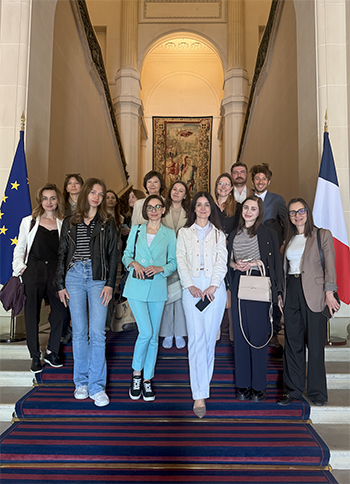
To deepen their understanding of the issues affecting European integration and to support Moldovan media professionals in incorporating better researched approaches to the enlargement of the European Union into their editorial work, the participants met in Brussels with representatives from several European institutions, including: the Directorate-General for Enlargement and the Eastern Neighbourhood (DG ENEST), the EPP Group's Committee on Neighbourhood Policy and Enlargement, and France’s Permanent Representation to the EU.
These discussions highlighted the significant progress made by the Republic of Moldova in implementing reforms, the importance of political dialogue and bilateral relations with EU countries, and preparations for the next stages of the negotiations. The official start of negotiations at the 2nd EU–Moldova Summit in Brussels (on 22 June) - a significant symbolic and political milestone in relations between the Republic of Moldova and the EU - was a key topic of these discussions.
One of the highlights of the visit was the discussion with the Republic of Moldova's Ambassador to the EU, Ms Daniela Morari, which gave journalists a clearer picture of the upcoming stages of the negotiations, the country’s ability to implement the reforms, manage challenges and maintain the support necessary for its accession both domestically and in the Member States.
Those present had the opportunity to learn about the insights gained and lessons learned from the dealings with Montenegro, an applicant country currently at an advanced stage in its European Union accession negotiations, at a series of meetings held at Montenegro’s Mission to the EU and at Carnegie Europe.
Following on from the discussions held in Brussels, the journalists met with representatives from the Ministry of Foreign Affairs and the Senate in Paris. This provided an opportunity to gain a better understanding of the French perspective on the challenges of European integration for applicant countries in the Eastern Neighbourhood, cooperation with the Moldovan authorities, and the importance of strengthening institutional resilience and combating propaganda.
The study visit provided the opportunity for discussions between the Moldovan journalists and European and French media professionals on the challenges posed by disinformation and the role of journalism in consolidating the European democratic space. The discussions at Agence France Presse, France Télévisions and France24 highlighted the challenges involved in reporting on the European institutions and the importance of building strong networks through which to access the appropriate information.
Free, powerful media to expose disinformation
Because they directly affect purchasing power, security, national identity and even states’ geopolitical choices, the topics addressed – energy and European integration – lend themselves to the spread of simplistic, misleading or manipulated narratives. The war in Ukraine, international tensions and foreign influence campaigns have further exacerbated this vulnerability, which weakens democracies.
In light of the need for the transparency and dialogue expected of Member States, and the mistrust of an audience that is being debilitated by disinformation, journalists no longer limit their role to that of debunker: they are also establishing themselves as interpreters and explainers of complex information, in France and also in Moldova.
At the end of these visits, the participants took away one key lesson: democratic resilience does not depend solely on the strength of institutions or infrastructure; it draws its strength from the quality of the information circulating in the public sphere and from journalists’ ability to counter disinformation through educational initiatives.
Further activities under the Democratic Strengthening of the Media in the Black Sea Region project, funded by the Ministry for Europe and Foreign Affairs and implemented by CFI in partnership with the French Embassies in the Republic of Moldova, Romania and Bulgaria, will continue to pursue this objective until August 2027.